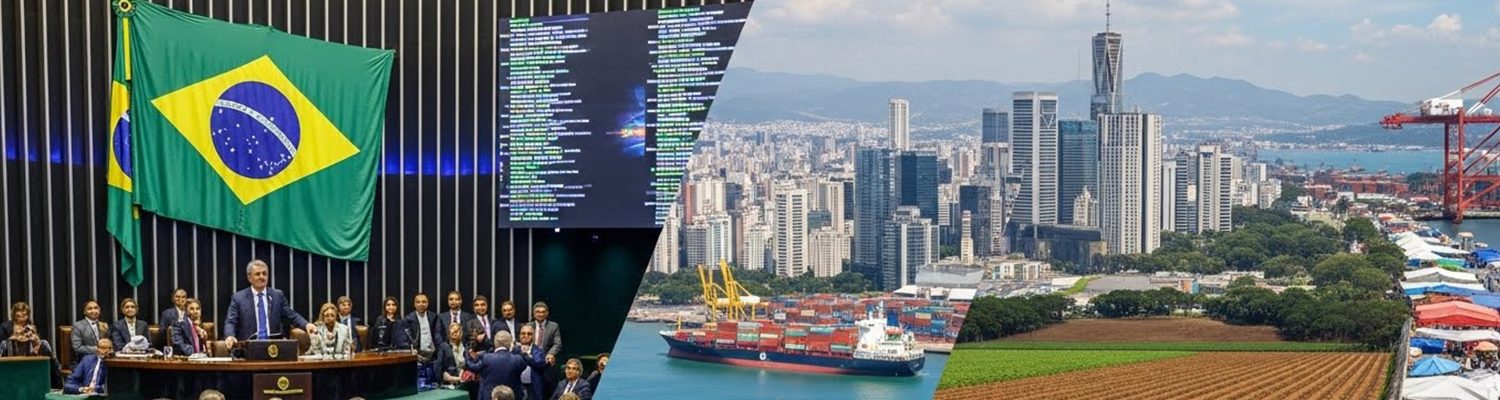

Brazilian fintech and traditional finance sectors in a modern city skyline
Updated: April 9, 2026
Markets in Brazil are not a single dial to be twisted; they are a web of policy, technology, and global flows. For analysts, going Finance Brazil means watching the interplay of policy shifts, fintech growth, and trade access to forecast how savings, borrowing costs, and investment will unfold in the coming year. The country’s financial system is being tested by shifting inflation dynamics, evolving digital banking competition, and new trade arrangements that could alter the profitability calculus for households and firms alike. This analysis frames the likely paths: what the base case assumes, where risks lie, and which practical moves ordinary Brazilians and business leaders can consider as incentives and constraints evolve in tandem.
Macro Trends Reshaping Brazilian Finance
Across the economy, macro forces are syncing in ways that affect liquidity, credit demand, and risk pricing. Inflation trajectories, even when cooling from peaks, leave policy authorities cautious about how quickly they ease monetary conditions. A still-fragile fiscal backdrop and persistent debt service pressures create a delicate balance for central bankers: ease too quickly and financial conditions may loosen too soon, ease too slowly and consumer confidence and investment could stagnate. These dynamics are amplified by global capital flows that respond to shifts in commodity prices and U.S. monetary expectations, influencing Brazilian real volatility and the cost of both domestic and offshore funding.
In this environment, household balance sheets face a double bind: higher borrowing costs dampen demand for durable goods and new credit lines, while strong wage growth and employment in urban centers keep debt service burdens manageable for many. This interplay matters because it not only shapes consumer credit growth but also affects the likely path of deposit rates, digital savings accounts, and the spread between secured and unsecured lending. The macro picture thus creates a feedback loop: policy posture conditions lending standards, which in turn influence consumption and investment trajectories, which then inform the next policy move. Intermittent inflation jolts can reintroduce risk premia in credit markets, slowing activity in sectors that rely on easy financing yet rewarding those with solid cash flows and diversified client bases.
Digital Banking and Retail Lending
Brazil’s digital banking ecosystem continues to mature, with large customers migrating from traditional lenders to platform-based accounts that pair payments, savings, and credit in a single app. The scale-up in fintechs and challenger banks has begun shifting the profitability calculus for retail lenders. Analysts point to customer growth as a primary driver of improved unit economics, even as competition intensifies on pricing, product features, and risk controls. In this setting, lenders that combine strong customer onboarding, robust credit-scoring capabilities, and prudent risk management can translate market share gains into sustainable earnings over time.
One high-profile example is a leading digital bank that reported a material uptick in profitability driven by expanding its user base and cross-selling capabilities. While the exact figures vary by quarter and methodology, the trend underscores a broader theme: as digital platforms scale, incremental revenue from existing customers often outpaces the incremental cost of acquiring new ones. For Brazil, this implies that the fintech segment can contribute to financial inclusion while also presenting a test for how well risk controls adapt to rapid growth, particularly in unsecured lending and small-business credit. Policy-makers and traditional banks alike are watching to see whether regulatory frameworks keep pace with product innovation, ensuring consumer protection without throttling innovation.
Trade, Policy, and the Mercosur-EU Deal
Trade policy developments can ripple through the Brazilian economy in meaningful ways. A notable development in recent months is a legislative step toward the EU-Mercosur free trade agreement, which, if it progresses, could broaden access to European markets for Brazilian exporters and influence the cost structure of domestic manufacturing and agriculture. The potential tariff reductions and simplified rules of origin may boost export volumes and incentivize capital expenditure in sectors aligned with Europe’s demand. Policymakers must weigh the benefits of greater market access against domestic adjustment costs and the need to align environmental and labor standards with international partners. While a deal promises longer-run efficiency gains, the near-term impact on credit cycles and corporate financing depends on how quickly supply chains reallocate and how import competition restructures domestic pricing.
On the domestic front, a lower house approval signals political appetite to advance trade liberalization, but the final shape of concessions will matter for sectors sensitive to foreign competition. For financial markets, open trade can support growth expectations and improve current account dynamics, which in turn can influence currency stability and foreign investment inflows. However, the path to implementation is not linear; it requires careful negotiation of side commitments and clear sequencing of tariff removals to avoid abrupt price shifts that could ripple through credit markets and consumer prices.
Risk Scenarios and Market Implications
Three broad scenarios help frame how Brazil’s finance landscape could evolve this year. The baseline assumes gradual policy normalization with a constructive macro backdrop: inflation remains contained, growth modestly accelerates, and consumer and corporate balance sheets improve as credit expands selectively into creditworthy borrowers. A downside scenario features renewed external shocks—commodity price volatility or a destabilizing global rate path—that tighten financial conditions, compress margins for lending, and test the resilience of household debt service capacity. A positive scenario envisions a faster-than-expected improvement in inflation dynamics, political clarity around reforms, and continued gains in digital financial inclusion that unlock higher productivity and broader investment opportunities.
Within these scenarios, the dispersion of outcomes is driven by the sequencing of policy steps, currency stability, and the adaptability of financial institutions to digital-first customer journeys. Those who plan on longer horizons should consider stress-testing debt exposure, diversifying across asset classes, and distinguishing between investment-grade credits and higher-risk segments whose cash flows may be sensitive to sentiment and liquidity conditions. Consumers and small firms can benefit from products that blend affordability with real-time risk monitoring, while lenders should emphasize prudent underwriting and scalable risk analytics to navigate a more dynamic credit environment.
Actionable Takeaways
- Review your household debt service capacity and align it with a credible plan for potential rate changes and inflation shocks.
- Explore digital banking options that integrate savings and credit, focusing on platforms with strong customer protection and transparent pricing.
- Diversify exposure across sectors—especially those tied to domestic consumption and export-oriented industries—to reduce concentration risk.
- For small businesses, assess currency risk and consider hedging strategies if you rely on imported inputs or international sales.
- Monitor policy signals and trade developments related to Mercosur-EU dynamics to anticipate changes in input costs and market access.
- Maintain flexibility in investment plans, incorporating stress-testing for scenarios with faster inflation rollback or external shocks.
Source Context