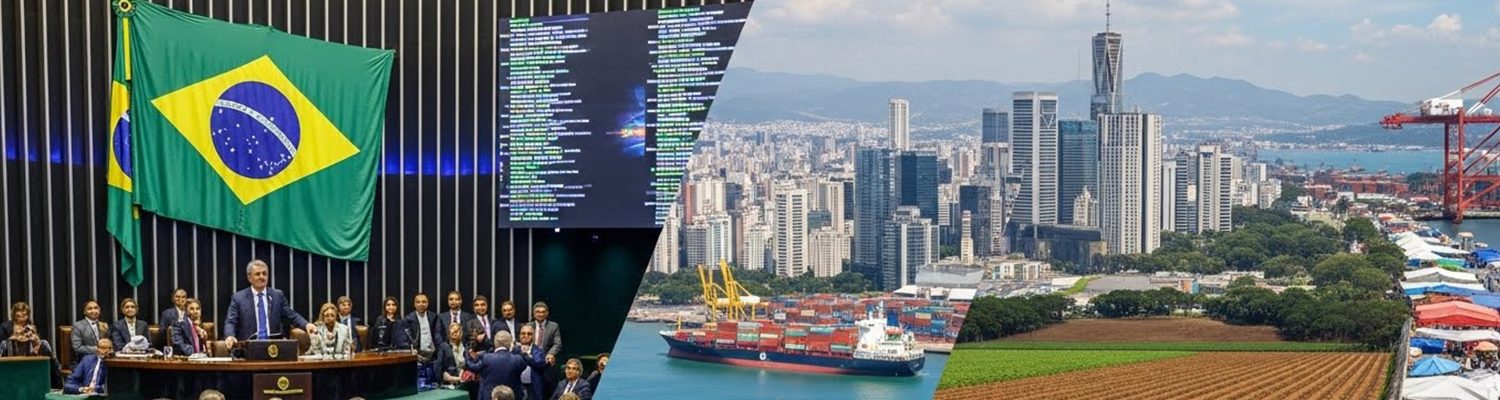

Brazilian finance desk with market charts and policy documents.
Updated: April 9, 2026
From the vantage point of Brazil’s markets, brazil Finance Brazil is not a slogan but a snapshot of policy, risk, and opportunity. As Lula’s administration advances a green growth agenda, the economy faces a delicate blend of fiscal prudence, climate ambition, and the lure of globally priced capital. This analysis traces how policy design, investment flows, and market expectations interact to shape Brazil’s financial landscape, with a focus on sustainability finance, infrastructure funding, and the resilience of local institutions.
Macroeconomic Backdrop and Policy Signals
Brazil sits at a juncture where policy clarity and credible fiscal planning are as important as headline reforms. Inflation has moderated from peaks, but inflationary dynamics remain a priority for the central bank and the administration alike. The Lula government has signaled a commitment to expanding productive investment while maintaining fiscal discipline, a balancing act that matters for long-horizon investors and domestic borrowers. A notable element of the policy conversation is the emphasis on mobilizing substantial green capital—reports and policy briefs point to an investment push of roughly $50 billion across Lula’s current term to accelerate the transition to a low-carbon economy. This level of capital mobilization is not just about energy projects; it signals a broader framework for climate finance, sustainable infrastructure, and technology deployment that could reshape project finance, credit frameworks, and state-led investment channels like development banks.
Policy signals encompass tax incentives for green projects, streamlined permitting for renewables, and an emphasis on energy efficiency in industry and housing. These signals affect the cost of capital, the availability of concessional financing, and the appetite of both domestic savers and foreign funds for Brazilian risk assets. At the same time, Brazil’s fiscal framework remains under scrutiny—investors seek transparency on debt trajectories, contingency planning for revenue shocks (commodity cycles, rainfall-dependent hydropower), and credible timelines for reform. In this setting, credible, rules-based planning becomes a critical asset: it reduces uncertainty, lowers risk premia, and can catalyze private sector-led complementarities to public investment. For the Brazil-focused investor, the interaction between macro policy signals and climate finance architecture will largely determine the pace and quality of growth the economy can sustain without rekindling inflationary pressure.
In practical terms, the policy mix that seems most constructive involves a disciplined but adaptable fiscal stance paired with a clearly defined climate finance roadmap. This would include standardized green metrics, issuance of green or sustainability-linked bonds, and a framework to channel private capital into bankable projects with measurable social and environmental co-benefits. If executed credibly, such a framework reduces funding costs for sustainable projects and expands the set of investable opportunities, from solar and wind to grid modernization and energy storage. For Brazilian households and small businesses, the downstream effects could materialize as cheaper credit for efficiency upgrades, more resilient infrastructure, and new financial products designed to share risk across sectors and geographies.
Investment Flows and Market Dynamics
The global capital environment remains a key dial to Brazil’s financial engine. International asset managers are recalibrating portfolios in response to Brazil’s policy signals, currency dynamics, and the potential for a broader green growth trajectory. With green finance gaining traction worldwide, Brazil’s ability to align regulatory and disclosure standards with international best practice will influence the speed at which green projects can attract syndicated lending, export credits, and institutional capital. In parallel, domestic institutions are adapting to a more mature risk environment: credit markets are becoming more nuanced about climate risk, collateral frameworks, and project finance structures that can withstand macro shocks while preserving yield for investors.
One illustrative tension is the role of government-linked channels versus private capital. While development banks can de-risk projects and provide early-stage funding, private funds seek predictable cash flows and transparent risk-sharing. This dynamic has particular resonance in telecoms, logistics, and energy sectors where large-scale capital is required and political risk is a material consideration. The Oi situation—where international asset managers have shown interest in strategic repositioning amid a changing political climate—serves as a case study in how policy-environment shifts can alter investor appetite. While the headline narrative emphasizes uncertainty, the underlying trend points to a longer arc: a Brazil that gradually builds a more liquid, diversified, and climate-aware financial market, capable of funding a broader portfolio of sustainable growth projects without sacrificing macro stability.
Market mechanics are also influenced by commodity cycles, inflation expectations, and the exchange rate pass-through. For Brazil, a depreciating or volatile currency can amplify the returns demanded by foreign lenders and equity investors even as local borrowers face higher funding costs. Conversely, a stable or appreciating real can ease debt servicing and expand financial inclusion by lowering the cost of imported capital and technology. Across sectors, the investment thesis increasingly hinges on risk-adjusted returns that account for green premium compression, regulatory risk, and the velocity of project approvals. In practical terms, investors should look for project pipelines with credible revenue streams, robust off-take arrangements, and clear indicators of political and regulatory continuity that align with the country’s medium-term growth story.
Risks, Scenarios, and Policy Trade-offs
No forecast can ignore the set of external and internal risks that can reframe Brazil’s finance outlook. The baseline scenario contends with a measured, reform-oriented path that sustains growth while gradually reducing macro fragility. Scenario one contemplates faster reform momentum: a credible fiscal path, faster consolidation of public debt, and accelerated rollout of climate finance mechanisms. In this scenario, green investments scale rapidly, credit conditions improve for sustainable projects, and private capital inflows rise as risk premia compress. The upside includes stronger productivity gains, job creation in higher-value sectors, and more resilient public finances through diversified revenue streams tied to green growth.
Scenario two considers slower reforms or misaligned incentives: fiscal pressures could intensify, market volatility could spike around policy announcements, and private capital could become more selective, raising hurdle rates for green projects. This path risks crowding out private investment or delaying critical infrastructure, which in turn could constrain long-term growth and widen the gap between aspirations and outcomes. A key trade-off in this space is how to balance near-term fiscal prudence with the need to mobilize long-duration capital for climate and infrastructure projects that deliver social gains. A third scenario looks at external shocks—commodity price swings, climate-related disruptions, or global rate shifts—that test Brazil’s resilience. In such a world, transparent governance, credible climate finance standards, and robust risk management become non-negotiable for maintaining investor confidence and market function.
Policy trade-offs also emerge in the realm of redistribution and inclusion. Expanding investment in green sectors must be paired with social protections and workforce development, lest the transition exacerbates inequality or leaves vulnerable groups behind. The most credible approaches integrate fiscal discipline with targeted social and regional investment, ensuring that the gains from growth are broadly shared and that the financial system remains inclusive, liquid, and adaptable to evolving risk landscapes.
Actionable Takeaways
- Investors should prioritize diversified exposure to green infrastructure, sovereign and corporate green bonds, and project finance with clearly defined off-take agreements and risk-sharing mechanisms.
- Policymakers should commit to a credible fiscal framework, coupled with a transparent climate finance roadmap, standardized ESG metrics, and predictable project approvals to lower investment frictions.
- Corporates in Brazil should accelerate energy efficiency, decarbonization programs, and climate-aligned procurement to improve creditworthiness and access to longer-tenor funding.
- Financial institutions should strengthen climate risk disclosures, stress testing, and product structuring that aligns with international best practices while remaining accessible to domestic markets.
- Households and small businesses would benefit from targeted financing for retrofits, digital inclusion, and skills development that enable participation in a greener economy.
Source Context
For background on the topics discussed, consult these sources:
Reuters: Brazil to mobilize nearly $50 billion in sustainable investments under Lula’s current term,
Yahoo Finance: PIMCO’s Bet on Brazil’s Oi Enters a New Political Era,
Fine Day: Brazil Plans $48 Billion Green Investment Push Under Lula Administration