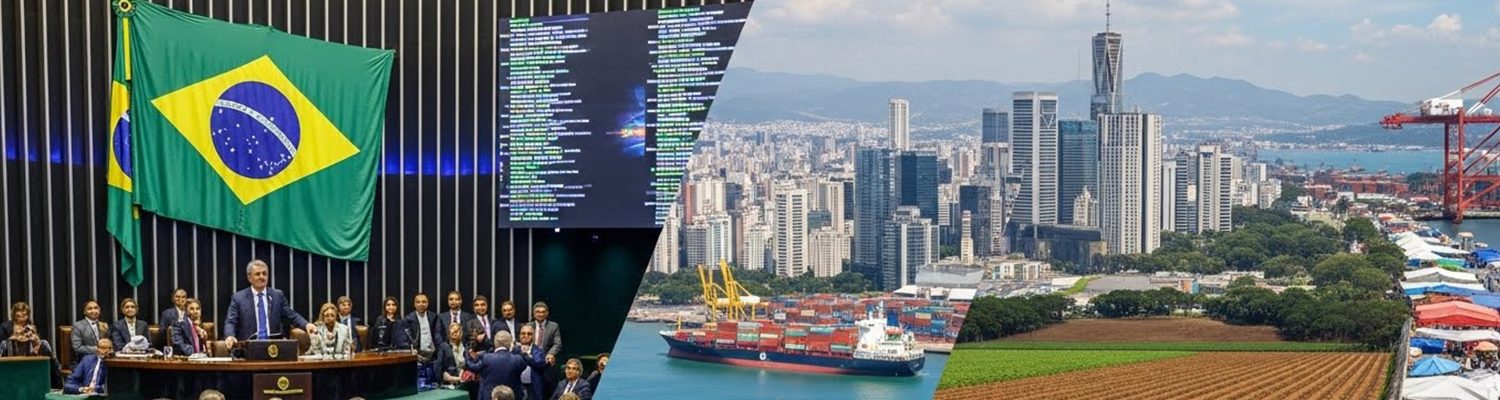

Brazilian finance district with green energy projects and data visualizations.
Updated: April 9, 2026
In brazil Finance Brazil, Lula’s administration has unveiled a plan to mobilize nearly $50 billion in sustainable investments over the current term, signaling a deliberate shift in how Brazil mobilizes capital for climate resilience, infrastructure and growth. The proposal frames finance not merely as a tool for growth but as a lever to advance social inclusion, regional balance and Brazil’s climate commitments amid a volatile global market.
A Bold Financing Agenda and Its Rationale
At the core of the plan is a strategy to blend public funds with private capital to unlock large, bankable projects. Using instruments such as green bonds, concessional lending from development banks, and structured public-private partnerships, the government seeks to crowd in pension funds, insurance capital, and export credit support. The emphasis is on sectors where Brazil has natural advantages and clear climate dividends: renewable energy capacity additions, mass transit and rail improvements, water and sanitation upgrades, and resilience measures for flood-prone regions. A formal pipeline, aligned with international climate finance norms, is intended to reduce counterparty risk and shorten project preparation times. In parallel, the administration signals a push to local manufacturing ecosystems—steel, cement, turbines, cables and other inputs—so the wealth created by the plan remains more broadly shared across regions facing higher development needs.
Critically, the financing blueprint treats climate action as a multi-year, cross-agency program rather than a single budget dash. It calls for improved data, standardized project appraisal, and safeguards on social impact and biodiversity. By coordinating with central banks, planning ministries, and development banks, the government aims to harmonize fiscal signals with private-sector incentives, reducing the chance that promising projects stall due to fragmented governance.
Fiscal Space, Policy Certainty, and the Investment Pace
The scale of mobilized capital hinges on Brazil’s ability to sustain fiscal credibility while delivering predictable policy signals. Debt dynamics, inflation, and the pace of structural reforms will shape financing conditions and the appetite of international lenders and domestic lenders alike. When policy becomes more transparent and future-oriented—clear budgets, defined timelines for procurement, and stable regulatory rules—private investors tend to accept longer tenors and lower yields, unlocking a greater share of the planned funding without widening deficits.
However, the plan is vulnerable to delays or reversals in reform momentum. Any drift in tax policy, changes to public procurement rules, or uncertainty around environmental licensing could raise execution risk and costs. The success of blended finance hinges on consistent governance and credible metrics, so that outcomes—jobs created, emissions reduced, and improved urban mobility—are measurable and publicly verifiable. In this setting, a credible framework for risk sharing between the public and private sectors becomes the differentiator between a headline initiative and a functioning program.
Market Reactions, Scenarios, and Corporate Outlook
Markets are likely to respond to the plan in ways that reflect perceived credibility and pipeline quality. If investors see a coherent, enforceable framework with a steady stream of bankable projects, green instrument spreads could tighten, and foreign capital could flow more readily into longer-term Brazilian assets. A base-case scenario envisions a gradual ramp-up of project readiness, modest GDP uplift from sectoral investments, and a more balanced current account as energy and transport infrastructure bolster productivity. In an optimistic scenario, timely reform implementation and robust project execution could lift investment growth and support currency resilience during global stress episodes. Conversely, a pessimistic path—driven by policy inconsistency, project delays, or financing snowball effects—could raise debt service costs, push up inflation expectations, and slow the anticipated macro gains. The Lula administration’s ability to maintain a coherent narrative and deliver on near-term milestones will be the key differentiator in how markets price risk.
For Brazilian firms, the plan could shift the competitive landscape. Domestic suppliers may gain scale through long-term public-private projects, accelerating transfer of know-how and enabling local job creation. At the same time, companies reliant on imported inputs could face currency exposure and pricing pressures if financial conditions tighten. In this environment, sectors such as renewable energy equipment, grid modernization, water systems, and smart-city services stand to benefit from reinforced demand pipelines, while obligors in sectors with fragile cash flows may face higher scrutiny from lenders seeking to manage credit risk.
Actionable Takeaways
- Align fiscal planning with a transparent and bankable project pipeline, leveraging blended finance and PPPs to attract private capital at scale.
- Publish clear criteria for project selection, impact metrics, and safeguards to reassure investors about additionality and social outcomes.
- Strengthen regulatory coherence and procurement timelines to reduce execution risk and improve predictability for financiers.
- Invest in domestic supply chains for renewable energy and green infrastructure to maximize local employment and value capture.
- Monitor global climate finance flows and currency risk, diversifying funding sources to avoid over-reliance on a single instrument or market.
Source Context
Key sector coverage informing this analysis includes recent reporting on Lula’s investment push and related industrial developments. Readers can review primary sources for background and context:
- Reuters: Brazil to mobilize nearly $50 billion in sustainable investments
- Yahoo Finance: Embraer cheers US return to zero tariff, predicts growth
- Fine Day 102.3: Brazil’s green investment push under Lula administration
Additional contextual reporting and financial analysis can be consulted through related economic and policy briefs from Brazilian financial press and international observers.