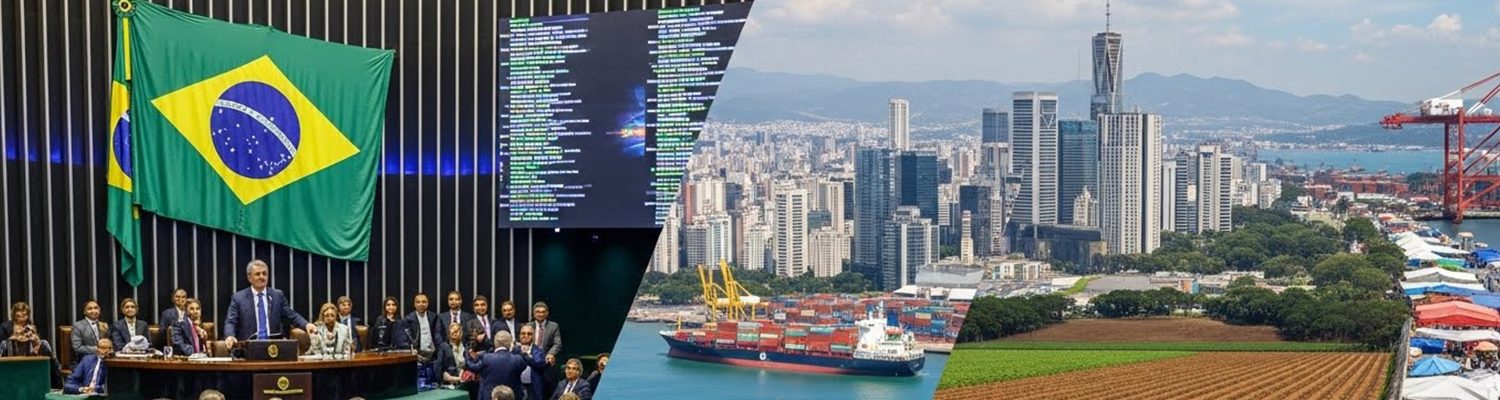

Brazilian skyline with fintech icons, Nubank branding, and Mercosur trade symbols representing Brazil's finance landscap
Updated: April 9, 2026
In Brazil’s evolving financial landscape, the phrase going Finance Brazil has become a shorthand for balancing fintech disruption with traditional lending, policy prudence, and cross-border trade opportunities.
Market backdrop for Brazil’s finance sector
Brazil’s financial system sits at a crossroads of rapid digitization, a still-responsive macro cycle, and external shifts affecting capital flows. Domestic banks and fintechs benefit from broadening access to credit and payments, even as inflation dynamics and the central bank’s policy stance keep funding costs under close watch. The resilience of consumer demand and a gradual normalization of monetary policy have allowed lenders to extend credit while maintaining risk discipline. In this environment, investors must pay attention to credit quality, funding access, and the evolving mix of bank deposits and wholesale funding. Moreover, the prospective implementation of cross-border trade arrangements and reforms can alter the demand for trade finance, FX hedging, and fintech partnerships.
Digital banking and consumer finance shifts
Nubank, Brazil’s leading digital bank, has shown that scale matters as the company expands its product suite and customer base. Recent reporting highlighted a material jump in quarterly profitability driven by user growth and cross-selling of credit products, even as funding costs and credit risk remain central to margins. For incumbents, the trend toward digital onboarding, instant payments, and accessible consumer credit is reshaping competitive dynamics, forcing traditional lenders to accelerate modernization or risk disintermediation. The broader fintech ecosystem benefits from rising financial inclusion and data-driven credit assessment, but faces intensified regulatory scrutiny and the challenge of sustaining unit economics across a diverse customer base.
Mercosur deal and cross-border finance implications
The recent progress on the EU-Mercosur free trade framework carries implications beyond tariffs and trade volumes. As products and services move more freely across borders, banks will increasingly support export finance, working capital facilities, and cross-border settlement arrangements. In Brazil, a more integrated Mercosur environment could attract capital flows and spur new lending to exporters, while also sharpening currency hedging needs for importers facing a more predictable regulatory environment. The long-run effect on the financial sector will hinge on the pace of deal implementation, accompanying regulatory alignments, and the spillover into investment and project finance linked to regional supply chains.
Regulatory risk and policy scenarios
Policy risk remains a salient feature for decision-makers in Brazil. The central bank’s independence, inflation trajectory, and the pace of rate normalization influence every corner of credit markets and risk-adjusted returns. Fintech regulation, consumer data privacy, and capital-market oversight are evolving areas that could either accelerate innovation or impose new compliance burdens. For lenders and investors, scenario framing—ranging from a benign, orderly policy path to faster-than-expected tightening or geopolitical shocks—helps in stress-testing portfolios and contingency planning. A careful read of fiscal developments, governance signals, and regulatory updates will be essential to avoid misreadings of the cycle and to adapt strategies accordingly.
Actionable Takeaways
- Monitor central bank guidance and inflation indicators to gauge the trajectory of interest rates and funding costs.
- Assess the credit quality and funding dynamics of digital banks, with emphasis on risk controls and capital efficiency.
- Follow Mercosur implementation progress and its effects on cross-border trade finance demand, FX hedging, and export financing.
- Diversify exposure across sectors and instruments to manage currency risk and policy shifts within Brazil’s evolving financial system.
Source Context
From an editorial perspective, separate confirmed facts from early speculation and revisit assumptions as new verified information appears.
Track official statements, compare independent outlets, and focus on what is confirmed versus what remains under investigation.
For practical decisions, evaluate near-term risk, likely scenarios, and timing before reacting to fast-moving headlines.
Use source quality checks: publication reputation, named attribution, publication time, and consistency across multiple reports.
Cross-check key numbers, proper names, and dates before drawing conclusions; early reporting can shift as agencies, teams, or companies release fuller context.
When claims rely on anonymous sourcing, treat them as provisional signals and wait for corroboration from official records or multiple independent outlets.