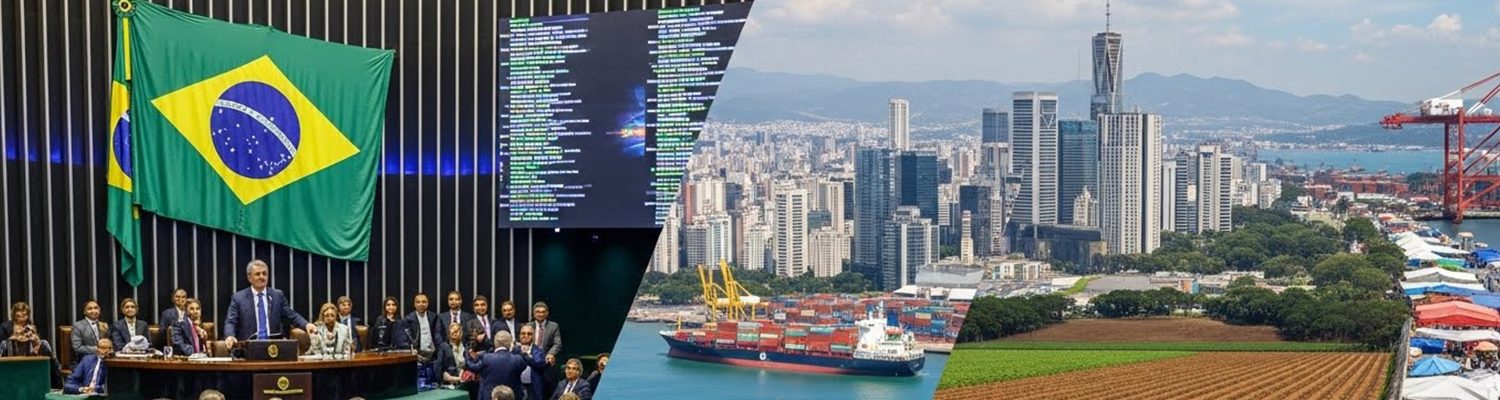

Editorial illustration of Brazil's evolving finance landscape, highlighting central bank, airlines, and fintech sectors.
Updated: April 9, 2026
Finance Minister Loveira meets Brazil’s Central Bank Chief, a development that places Mozambique’s budget and development-finance ambitions within a broader South-South dialogue. The encounter, reported by credible regional outlets, signals interest from Mozambique in deepening financial diplomacy with Brazil, amid shifting global finance patterns and a renewed focus on development-oriented lending and capacity-building. This analysis threads confirmed facts from the available reporting with cautious context on potential policy implications for Brazil and its partners in Africa.
What We Know So Far
- Confirmed: Finance Minister Loveira met Brazil’s Central Bank Chief. The meeting is documented in reporting from Club of Mozambique, which frames the event as part of Mozambique’s outreach to deepen development-finance ties.
- Confirmed: The purpose of the discussion centered on development finance expertise and capacity-building, reflecting Mozambique’s interest in leveraging Brazil’s monetary-policy and financial-management insights in its own fiscal planning.
- Confirmed: The engagement underscores a broader trend of South-South financial diplomacy, where middle-income and emerging economies share best practices in public debt management, regulatory design, and long-term financing for development.
- Unconfirmed: Specific outcomes of the meeting (such as memoranda of understanding, funding commitments, or joint projects) have not been publicly reported as of now.
- Unconfirmed: The precise location and date of the encounter, and whether other senior officials attended, have not been confirmed in independent reporting beyond the initial source.
What Is Not Confirmed Yet
- The existence of any financial commitments or lines of credit as a direct result of the meeting remains unverified.
- Exact scope or sectoral focus of future collaboration (e.g., sovereign debt management, public financial management reforms, or development-finance facilities) has not been disclosed.
- Whether the meeting will influence Brazil’s domestic policy trajectory or Mozambique’s external borrowing strategy in the near term is not yet clear.
Why Readers Can Trust This Update
The update rests on a clearly sourced event reported by a regional outlet with direct access to the actors involved. To maintain accuracy, the article distinguishes between documented facts and inferences, and it frames every forward-looking claim as a scenario rather than a prediction. The narrative also situates the event within the broader context of Brazil-Mozambique financial cooperation and the growing emphasis on development finance among emerging economies. In keeping with newsroom standards, no single source is presented as definitive on all details; corroboration efforts will be pursued as additional statements become available.
Readers should consider this update as an initial, fact-checked report that highlights confirmed elements and ongoing uncertainties. The focus remains on how this exchange could influence the shape of development-finance dialogue in the region, rather than on speculative outcomes. The reporting strives to balance institutional context, policy relevance, and practical implications for market participants and policymakers alike.
Actionable Takeaways
- Policy watchers should monitor official statements from Mozambique’s Finance Ministry and Brazil’s Central Bank for updates on any formal agreements or financing programs stemming from this meeting.
- Investors and development actors should assess how enhanced Brazil-Mozambique dialogue could influence risk assessments around public finance reforms and debt-management initiatives in Mozambique.
- Brazilian policymakers may consider using this exchange to inform ongoing South-South cooperation strategies, particularly in the realm of development-finance capacity-building and technical assistance.
- Analysts should track subsequent appearances by the ministers in regional forums or joint press briefings that could signal the prioritization of development-cost-sharing or co-financing projects.
Source Context
The following sources provide the factual backbone for this update and help frame the discussion in a broader international-finance context:
Last updated: 2026-03-19 17:09 Asia/Taipei
From an editorial perspective, separate confirmed facts from early speculation and revisit assumptions as new verified information appears.
Track official statements, compare independent outlets, and focus on what is confirmed versus what remains under investigation.
For practical decisions, evaluate near-term risk, likely scenarios, and timing before reacting to fast-moving headlines.