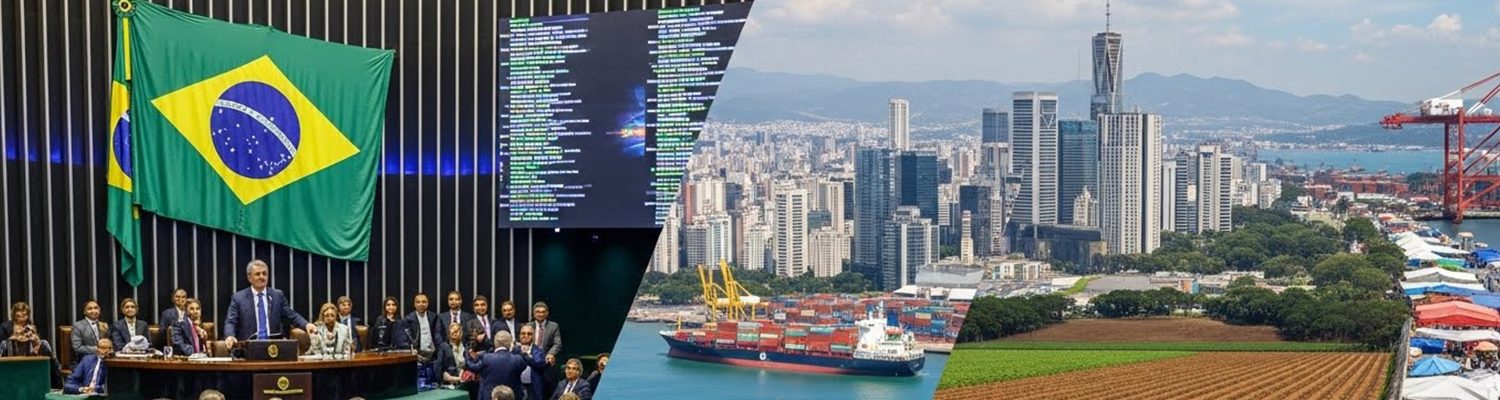

Brazil’s Finance Brazil in Focus: Rates, Growth, and Investment
Updated: April 9, 2026
This analysis of brazil’s Finance Brazil examines how the economy navigates a stubborn mix of slow growth, persistent inflation, and a high-rate regime that shapes credit, investment, and the state’s ability to pull levers for growth.
Macroeconomic backdrop and the high-rate reality
Recent data roundly indicate a slower expansion in activity even as price pressures gradually ease. In Brazil, the central bank has defended a restrictive monetary stance to keep inflation in check, a stance that has translated into tighter credit conditions for households and firms. The result is a fragile demand environment: consumer spending softens, business investment hesitates, and the currency oscillates in response to global rate cycles. Analysts note that while the inflation track is improving, the growth impulse remains hostage to financing costs and the confidence necessary to deploy capital at scale. This framing aligns with coverage detailing how high interest rates curb growth and restrain the pace of economic rebalancing.
Policy trade-offs facing the Lula administration
Policy makers face a delicate balancing act between preserving fiscal discipline and providing enough support to maintain credit access and public investment. A notable dimension in recent coverage is the Lula administration’s cautious approach toward stepping in to rescue lenders amid private sector losses. In particular, there is scrutiny of potential state-backed interventions after Banco Master losses, with government officials signaling a preference for structural reforms and private-sector-led recovery over ad hoc bailouts. The tension underscores a broader question: how to sustain financial stability while expanding the catalytic capacity of public and private finance in a high-rate, slow-growth regime. The dynamic is interpreted by observers as a test of governance credibility and policy predictability, both of which influence investor calculus and capital allocation decisions.
Investment climate signals and sector highlights
Beyond macro indicators, capital flow signals a nuanced picture of Brazil’s investment climate. A notable development is Shell’s commitment to backstop Raizen with a multi-hundred-million-dollar investment, reinforcing confidence among strategic players in Brazil’s energy and biofuels corridor. Such moves signal that, even when headline growth falters, there remains a push from private capital toward productive capacity—provided policy clarity and accessible financing remain intact. For investors and corporate decision-makers, the message hinges on two factors: regulatory stability for mixed-ownership sectors and credible, timely policy signals that reduce execution risk for large-scale projects. In a baseline scenario, continued selective investment could gradually lift capex across refining, logistics, and agribusiness networks. In alternative scenarios, faster reform momentum could unlock credit channels and lift expected returns, while persistent headwinds in inflation or fiscal fatigue could delay capacity expansions and reallocate attention to balance-sheet repair.
Forecast scenarios and strategic implications
Analysts frame the medium-term outlook around three plausible trajectories. In the baseline, inflation remains anchored and the central bank gradually eases policy, allowing a measured revival in credit and private investment as confidence stabilizes. A more optimistic scenario would hinge on accelerated reform momentum and improved access to long-term financing, unlocking capital for infrastructure and energy transitions. A downside path would feature lingering macro fragility, tighter credit conditions, and delayed project timelines as firms recalibrate risk in a higher-rate environment. Across these scenarios, the strategic implication for Brazil’s finance landscape is clear: policy predictability, coupled with targeted sector support, matters as much as headline growth rates. The inklings from energy investments and corporate commitments suggest that resilience exists, but it is contingent on credible governance and a stable macro-financial framework.
Actionable Takeaways
- Track the central bank’s policy guidance and inflation trajectory to gauge when financing conditions could loosen for households and businesses.
- Balance exposure across sectors: energy, agribusiness, and infrastructure appear most sensitive to policy signals and credit access reforms.
- Monitor developments around state involvement in banking and finance to assess the potential for risk-sharing or selective support measures.
- Assess the impact of large private investments, like Raizen-related projects, on regional growth nodes such as logistics hubs and biofuel supply chains.
- Prioritize liquidity and risk management in portfolios targeting Brazilian assets, emphasizing longer-term credits with clear policy visibility.
Source Context
For context, this analysis builds on recent reporting about Brazil’s growth trajectory under high rates, corporate investment signals, and fiscal-policy choices: