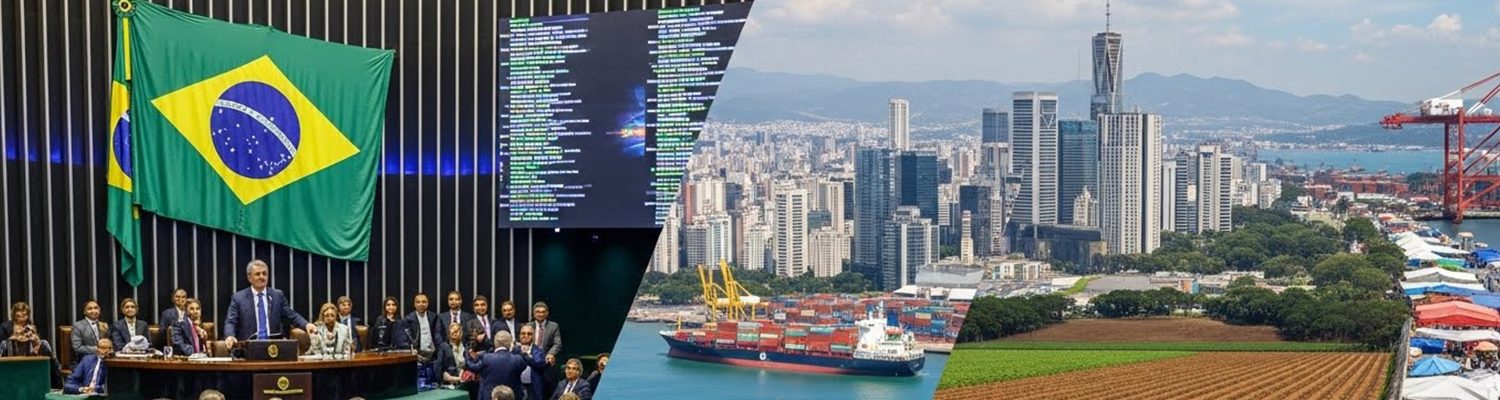

Brazilian fintech and digital finance concept art
Updated: April 9, 2026
In brazil’s Finance Brazil, policymakers and investors confront a defining crossroads: how to sustain growth while reshaping the financial system to be more inclusive and resilient. This moment blends fiscal prudence, climate ambition, and digital disruption, forcing banks, pension funds, and capital markets to recalibrate risk and return in a country of vast opportunity and uneven development. The analysis that follows connects policy signals, corporate moves, and consumer finance trends to illuminate what comes next for Brazil’s markets.
Macro context: a shifting global backdrop and domestic priorities
Global monetary tightening over recent years has amplified liquidity costs and volatility, placing renewed emphasis on credible fiscal rules and transparent inflation targeting. In Brazil, exchange-rate dynamics and a history of commodity-driven cycles complicate long-horizon planning for banks and corporates alike. A pragmatic reading suggests that growth will hinge on three levers: disciplined public finance, a credible reform agenda, and selective capital allocation toward sectors with domestic productivity spillovers. Even as headline numbers wobble, the underlying credit channel remains the primary transmission belt for households and small firms seeking to weather volatility and widen participation in formal financial markets.
Viewed through a domestic lens, demographic dynamics and urbanization continue to shape demand for affordable credit, reliable payment rails, and structured finance. The interplay between monetary policy expectations and regulatory signals will also influence risk pricing in credit markets, project finance, and covered bonds. For Brazil’s investors, the key question is not only where capital flows go, but how they are priced, insured, and measured against climate and social objectives that increasingly guide corporate strategy and public policy.
Policy and capital: sustainable finance strategy and regulatory signals
A central feature of the current discourse is a sustained push toward sustainable finance that aligns capital allocation with environmental, social, and governance (ESG) criteria without sacrificing efficiency. The envisioned 2026 sustainable finance framework emphasizes consolidation—simplifying rules for green bonds, sustainability-linked loans, and climate disclosures—while actively attracting strategic, long-duration capital to infrastructure, clean energy, and urban-mobility projects. For Brazil, the policy intent is to reduce marginal financing costs for projects that demonstrate measurable climate impact and social inclusion, creating a more predictable pipeline for banks and asset managers alike.
The policy direction also interacts with the country’s evolving corporate landscape. Firms that align procurement, energy usage, and workforce development with medium-term climate targets are more likely to secure lower-cost financing and access to international capital pools. Yet the path requires robust data, standardized metrics, and credible disclosure frameworks—areas where public–private collaboration is expected to intensify in coming quarters.
Corporate finance and investment flows: opportunities and risks
Global and domestic firms are recalibrating their Brazil exposure in light of shifting cost structures, exchange-rate volatility, and the evolving tax and regulatory environment. Large-scale manufacturing and technology investments are increasingly bankable when accompanied by export or efficiency-linked benefits, yet timing remains sensitive to policy announcements and macro surprises. In practice, corporate finance teams are prioritizing blended funding strategies: a mix of domestic debt, foreign currency hedges, and non-dilutive funding from government-backed programs where available.
Recent corporate moves in the Brazilian economy illustrate the cross-pollination between traditional manufacturing, technology, and consumer sectors. For example, a multinational retailer’s expansion and a biotech firm’s regional office opening highlight how cross-border partnerships and local capabilities can anchor longer-term investment theses. Such developments underscore the importance of high-quality due diligence on supply chains, local market intelligence, and currency risk management as prerequisites for execution in the Brazilian market.
Digital finance and inclusion: fintechs and payment rails
Brazil’s financial system is notably at the forefront of fintech adoption, payment modernization, and digital banking. The rapid expansion of digital wallets, instant payments, and mobile lending has lowered barriers to formal finance for households and small businesses, while regulators push for higher standards of cyber resilience and consumer protection. These dynamics support a more inclusive credit ecosystem and broaden the addressable market for lenders and fintechs willing to invest in risk analytics, identity verification, and customer onboarding efficiency.
At the same time, digital finance growth faces headwinds from global liquidity shifts, cyber risk, and the challenge of maintaining financial stability as tech-driven products scale. Experienced operators emphasize the need for robust data governance, transparent pricing, and user-centric product design to sustain trust and drive penetration in both urban and underserved rural areas.
Scenarios for 2026-2028: what brazil’s Finance Brazil might look like
Three plausible paths illustrate the contours of the coming years. In the base case, policy continuity combined with disciplined fiscal management supports moderate growth, steady credit expansion, and gradual improvement in investment-grade sentiment. The optimistic scenario hinges on accelerated green funding, expedited regulatory alignment with international standards, and technology-driven productivity gains that widen the investment universe. A downside scenario contends with political and external shocks that constrain public finance space, slow reform momentum, and heighten funding costs, testing the resilience of lenders and borrowers alike.
Across these scenarios, the common thread is the calibration of risk and return through better data, clearer disclosures, and more predictable policy signals. The degree to which Brazil can institutionalize credible frameworks for sustainable finance, while expanding digital inclusion and improving the efficiency of capital markets, will largely determine whether the country migrates from a volatility-prone frontier to a more integrated, long-horizon financing environment.
Actionable Takeaways
- For policymakers: anchor credible fiscal rules and transparent inflation targeting to reduce risk premia in credit markets.
- For investors: diversify across green debt, infrastructure, and capable fintechs with clear governance and data standards.
- For corporates: pursue blended finance with a clear sustainability rationale, pairing domestic debt with strategic partnerships and export incentives.
- For financial institutions: invest in data quality, cyber-resilience, and customer-centric digital products to sustain growth in a fast-evolving payments landscape.
- For international partners: align with Brazil’s sustainable finance framework to unlock long-dated capital and regional collaboration opportunities.