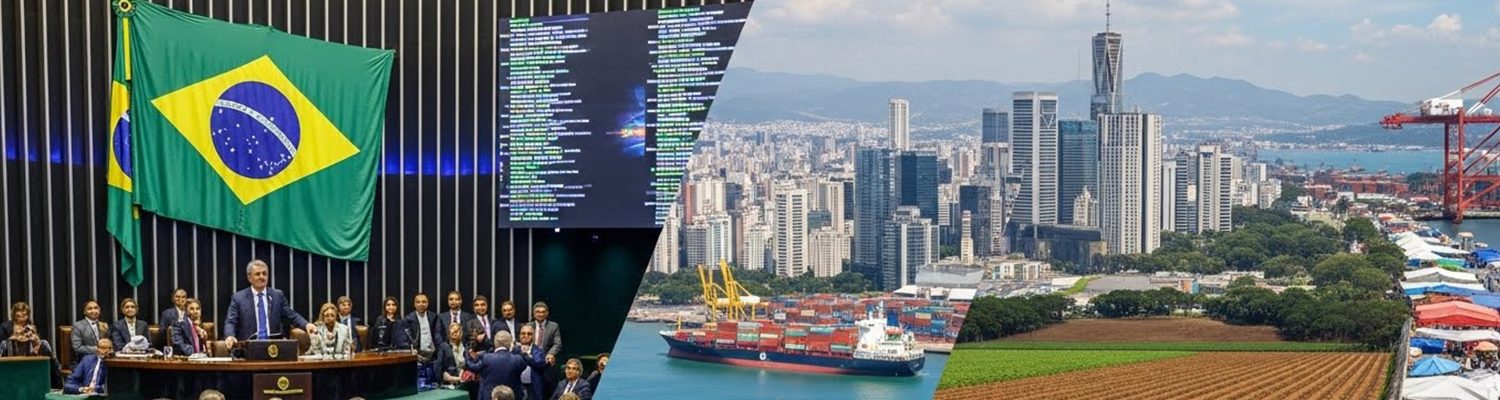

Brazilian finance desk with market charts and policy documents.
Updated: April 9, 2026
In brazil’s Finance Brazil, policy choices, debt dynamics, and currency risk intersect with investor sentiment to shape the near-term outlook for savers, borrowers, and businesses across the country. This analysis looks at how fiscal posture, monetary signals, and external trade cues interact to frame opportunities and risk for Brazil’s financial markets in 2026.
Context: Brazil’s Fiscal and Monetary Landscape
The macro framework remains defined by a balance between debt sustainability, inflation control, and the need to bolster investment. Brazil’s public debt burden persists at elevated levels relative to regional peers, prompting fiscal rules that seek to cap deficits while allowing space for capex in priority sectors. The central bank’s credibility on inflation targets supports a gradual normalization of policy rates, yet currency volatility and external financing costs continue to color borrowing conditions for firms and local governments. For investors, the key question is whether a credible consolidation path can be maintained without sacrificing growth momentum, and how tax reform and pension reform progress will alter revenue projections and debt dynamics over the next 12 to 24 months.
In this environment, credit markets and equity risk premia react to a mix of domestic policy signals and global liquidity tides. A stable or improving external balance of payments, coupled with cautious fiscal discipline, tends to compress risk spreads and lift the appetite for longer-duration assets. Conversely, policy slips—whether on expenditure, revenue, or structural reform—tend to widen credit gaps and test the resilience of funding strategies for infrastructure and public procurement.
Policy Shifts and Market Signals
Recent cabinet moves hint at a recalibration of policy emphasis, with a new generation of finance officials tasked to sustain reform momentum while navigating a politically diverse legislature. While no single decision guarantees a swift policy pivot, the tone from Brasília has become more market-aware, prioritizing predictable budgeting, transparent procurement, and timely revenue collection. Markets also watch external developments: the aerospace sector benefited from signals of a warmer trade stance with the United States, aiding exporters and potentially supporting a broader commodity and manufacturing cycle. For Brazil’s Finance Brazil, the test is whether these signals translate into credible, implementable measures that reassure lenders and investors about fiscal trajectory and debt service costs.
Beyond ministerial personnel, the ecosystem of policy signaling includes planned reforms to tax administration, pension reform updates, and continued privatization efforts. The positive impulse from improved trade conditions, including reduced tariffs on select goods, can bolster export-led activities and help narrow current account pressures if matched by domestic productivity gains. The central bank’s communication remains central: gradual rate adjustments, clear forward guidance, and a transparent inflation framework help anchor long-run expectations and reduce funding costs for government and business.
Sector Outlook and Auctions
March is shaping up as a focal point for capital allocation through auctions in key sectors. Government-scheduled, billion-dollar auction programs are designed to attract private participation, unlock project finance for infrastructure, and bring efficiency gains to energy, logistics, and utilities. The success of these auctions will hinge on regulatory clarity, project-bankability, and the broader macro backdrop—especially the pace of growth, inflation, and the policy stance. Exporters like aerospace players can benefit from a more favorable external environment, while domestic lenders and borrowers will be watching liquidity conditions and credit availability as a certainty of funding sources evolves.
Industry dynamics suggest a gradual shift toward greater private participation in public projects, supported by clearer risk-sharing frameworks and improved dispute resolution. Investors should weigh sector-specific risks, such as regulatory changes or competitive bidding dynamics, alongside macro variables. The interplay between fiscal discipline and an anticipated increase in private capital participation could catalyze a multi-quarter cycle of investment and employment, helping to stabilize growth prospects even if headline figures remain modest in the short term.
Actionable Takeaways
- Monitor the evolution of Brazil’s fiscal framework and any reform milestones; policy credibility hinges on credible debt trajectories and timely revenue measures.
- Track central-bank guidance and macro indicators (inflation, growth, currency trends) to calibrate risk and duration of Brazilian assets.
- Diversify exposure across sectors with different sensitivity to policy and external demand, including aerospace, infrastructure, and commodities.
- Be prepared for auction windows in March by assessing project bankability, regulatory risk, and private participation potential.
- Stay alert to political developments and procurement reforms that could alter investment timelines and contract terms.
Source Context
Context and data points referenced here draw from recent coverage on executive shifts, trade signals, and sector auctions.