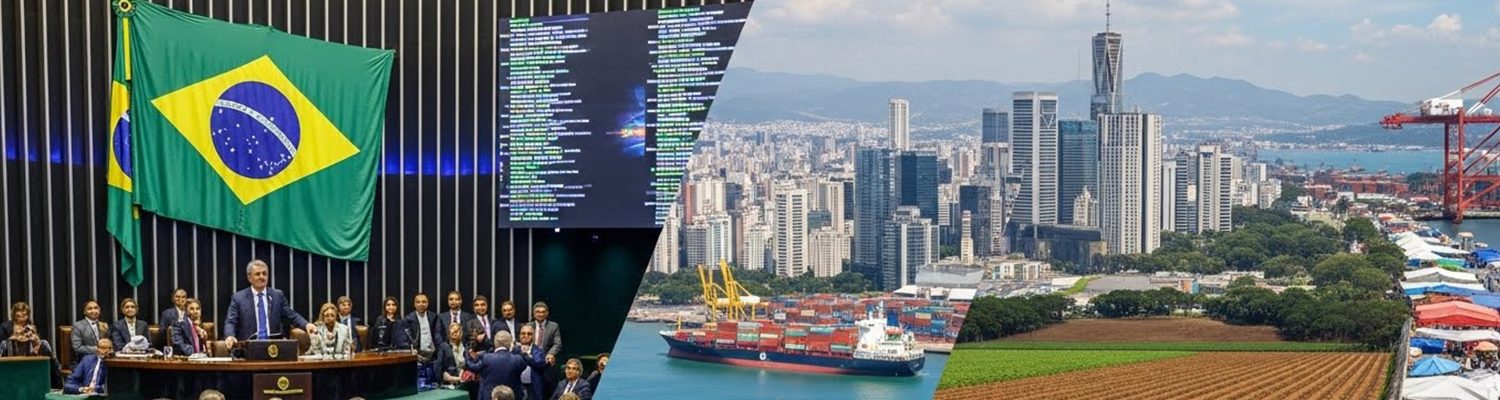
Editorial illustration of Brazil's finance landscape and net-zero financing dynamics.
Updated: April 9, 2026
As markets watch brazil Finance Brazil evolve under shifting policy and global capital flows, debt management, tax reform, and leadership changes are moving from abstract debates to practical risk assessments. The coming quarters will test Brazil’s ability to balance growth with fiscal credibility, while investors weigh exposure to higher-yield debt and a currency that remains susceptible to external shocks. This piece offers deep context, outlining how three policy vectors interact and what it implies for households, firms, and portfolio decisions.
Global context and Brazil’s debt strategy
Brazil sits within a wave of emerging-market issuers expanding sustainable finance and lengthening debt maturities to smooth volatility. The rise of blue and green bonds has highlighted a trend where issuance is not only about funding projects but also communicating a policy orientation to investors. In Brazil, the government and state-owned banks have experimented with new instruments that blend yield with environmental and social criteria, while maintaining a disciplined debt path. The challenge is to translate longer tenors and higher coupon costs into lower macro-volatility, particularly given inflation and currency swings. If global rates remain range-bound, Brazil could pull forward risk-neutral demand for longer-duration paper, but any deviation from fiscal targets could tighten conditions and raise funding costs.
Tax policy moves and import dynamics
Policy signals around taxation have a direct bearing on private investment, consumer prices, and competitiveness. Recent reports of a partial rollback of an import-tax hike illustrate the tension between domestic stimulus and revenue stability. A rollback would lower input costs for manufacturers and exporters in the near term, potentially easing inflation in the second half of the year, but could stretch the government’s fiscal room if not paired with offsetting reforms. The policy calculus now hinges on whether the authorities can sustain a credible revenue path while keeping essential public services funded. In practice, businesses facing shifting import costs will recalibrate supply chains, while central banks will watch for second-order effects on inflation expectations and wage dynamics.
Leadership shifts and budget management
Media chatter around leadership transitions at the Ministry of Finance—such as claims that the Rosito figure plans to depart for a World Bank position in Asia—highlights a broader question: who steers fiscal policy during a period of reform and external uncertainty? When political appointees move to international roles, the institutional memory of policy pushback and reform design can waver, or alternatively, fresh voices can accelerate a new wave of reforms. Analysts are watching whether a successor can sustain a fiscal framework that maintains credibility with markets and rating agencies, while ensuring that development finance remains aligned with domestic priorities. For investors, the key is to assess not just personnel but the continuity of the policy toolkit and the sequencing of reform steps.
Market scenarios and policy pathways
Three scenarios seem plausible over the next 12 months. A baseline path would emphasize gradual consolidation, disciplined debt management, and continued support for private investment through predictable tax and regulatory signals. A downside scenario could feature delayed reform momentum, higher financing costs, and episodic capital outflows if external conditions worsen. An upside path would hinge on credible reforms delivering stronger growth, containment of inflation, and a stronger external position that attracts risk capital at longer tenors. Each scenario implicates the balance between fiscal targets, monetary policy, and Growth-enhancing reforms. The emergence of green or blue financing tools could help reduce the cost of capital if investors perceive a credible climate and sustainability framework, provided fiscal discipline remains intact.
Actionable Takeaways
- Policymakers: reaffirm a credible medium-term fiscal plan with transparent targets and timely reporting to preserve market confidence.
- Debt managers: prioritize liquidity and debt composition strategies that dampen refinancing risk during volatility spikes.
- Investors: monitor auction calendars, currency hedging needs, and the pace of reform signals to calibrate duration and risk exposure.
- Businesses: prepare for potential shifts in import costs, supply chains, and regulatory timelines; diversify supplier networks accordingly.
- Central bank watchers: assess inflation trajectories and the alignment between price stability and growth impulses in policymaking.
- Analysts and journalists: frame narratives with scenario-based analysis and verify leadership transitions with official sources.
Source Context
For background on the issues covered, see the following source materials:
- LatinFinance: Brazil’s blue bond wave and climate-linked funding strategies. read the LatinFinance briefing on Brazil’s blue-bond wave.
- Reuters: Brazil partially rolls back import tax hike, with implications for inflation and industry. Reuters coverage of the import tax rollback.
- TradingView: Rosito to leave Finance Ministry for World Bank post in Asia, sources say. coverage of leadership changes and development-finance links.