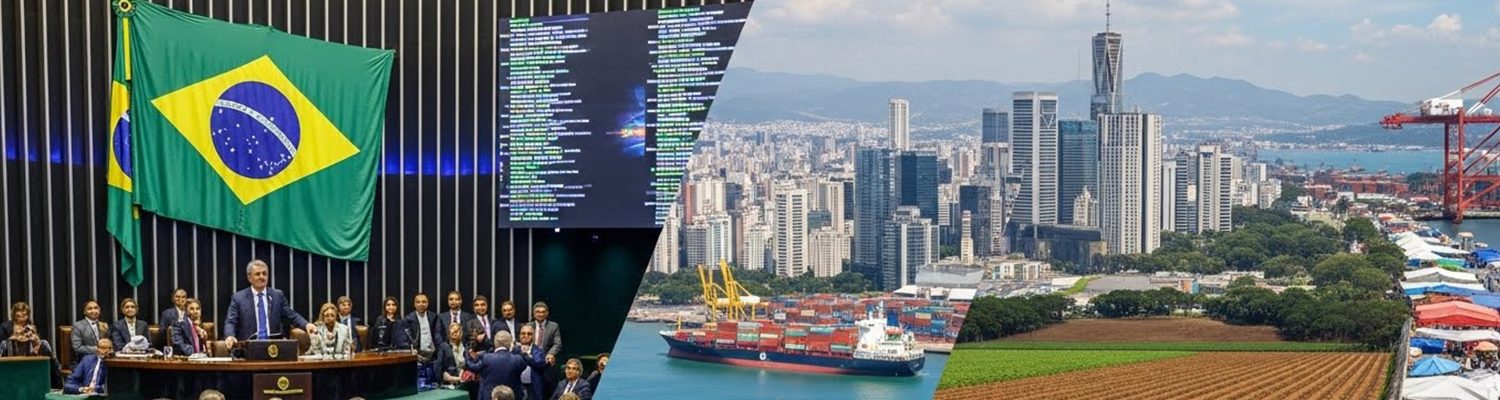
Brazilian finance newsroom with market charts and portfolio diversification visuals
Updated: April 9, 2026
holdings Finance Brazil stands at a crossroads, where global capital flows meet Brazil’s domestic policy shifts, and the way savers and institutions structure portfolios will define the next decade. This analysis examines how the term holdings Finance Brazil frames not just ownership of assets, but the rhythm of risk management, diversification, and governance that Brazilian investors need to navigate in a turbulent global market.
Rethinking Brazilian Holdings: The Landscape
The Brazilian investor world has moved beyond a pure domestic focus. While banks and commodities remain anchors, flows into global assets and diversified funds have risen. The shift reflects a broader desire for portfolio hygiene and a recognition that no single economy is immune to shocks. For households and institutions, holdings now often span cash, fixed income, equities, and select international exposures. The practical challenge is balancing yield in a high-inflation era with currency and liquidity risk. As issuer credit quality and regulatory clarity improve in fits and starts, the landscape is becoming more nuanced; not every holding is a bet on a single macro story. Investors now ask whether the diversification they pursue is sufficient to weather a commodity price cycle, a sudden policy shift, or a global slowdown. The answer lies in a disciplined framework that links asset selection to time horizons, liquidity needs, and risk budgets.
Capital Flows and Portfolio Hygiene
Capital flows into Brazil reflect both global risk appetite and local policy signals. When US rates tighten, Brazilian assets tend to attract capital if local yields justify risk, but that inflow can reverse quickly if the currency comes under pressure or if inflation expectations reprice. For Brazilian funds, the emphasis is on portfolio hygiene: clear benchmarks, transparent holdings, and robust liquidity. Managers increasingly separate tactical exposures from strategic core bets, using currency hedges where cross border risk is material. The practical implication for investors is not to chase hot returns but to design a plan that scales with time and tolerance for drawdowns. In this framework, the decision to hold or trim international positions depends on a measured read of macro momentum, not a knee-jerk reaction to a day of market noise.
Regulatory Shifts and Corporate Governance
Brazilian markets benefit from stronger governance signals, but policy cycles still create uncertainty for holdings. The regulatory environment has become more demanding on disclosure, risk management, and accountability, with the market rewarding issuers that demonstrate credible governance and transparent capital allocations. For investors, governance quality often serves as a leading indicator of long term viability and price resilience. At the same time, policy discussions on tax reform, fiscal reforms, and state involvement in the economy add a layer of complexity to the performance of holdings across sectors. Within this framework, risk assessment must consider governance track records, board independence, and alignment of incentives with shareholder value. A key nuance is that regulatory clarity can unlock patient capital, but sudden shifts can compress valuations in the near term. Risk management requires monitoring not just earnings, but also how policy expectations evolve around competition, investment, and capital allocation.
Risk Scenarios
Risk Scenarios for Brazil are best understood as part of a spectrum rather than distinct bets. In a base case, gradual reforms and steady growth support a diversified portfolio. In a constructive upside, commodity cycles improve, technology adoption accelerates, and policy momentum enhances capital formation. A downside path includes global tightening, political friction, and currency volatility that tests liquidity and hedging strategies. In all cases, investors should stress-test holdings Finance Brazil against currency shocks, timing of capital calls, and the reliability of forward-looking guidance from management teams. The objective is not to predict a exact outcome but to prepare a structured set of actions for a range of plausible futures.
Actionable Takeaways
- Build a diversified, cross asset portfolio that aligns with time horizons and liquidity needs
- Prioritize governance quality and transparent disclosure when selecting holdings
- Use currency hedges for foreign exposures to manage FX risk without sacrificing upside
- Monitor regulatory developments and policy signals that influence capital allocation
- Establish clear risk budgets, rebalancing rules, and exit strategies for adverse scenarios
Source Context
Selected background readings assist in framing the current discussion on holdings and Brazil markets.